
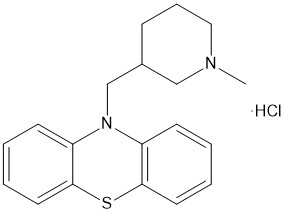
Mepazine HCl | MALT1 protease inhibitor
Available Options
| Size: | Price | Quantity | |
|---|---|---|---|
| 10 mg | $60.00 | ||
| 50 mg | $160.00 |
Mepazine (2975-36-2) was originally used clinically as a tranquilizer and antipsychotic medication. It has more recently been identified as a potent (IC50 = 830 nM) MALT1 protease inhibitor.1 It inhibited anti-apoptotic NF-kB signaling and decreased IL-2 production in diffuse large B cell lymphoma leading to apoptosis both in vitro and in vivo. Mepazine reduced proliferation and increased apoptosis in pancreatic ductal adenocarcinoma cells.2 It was also able to reverse epithelial-to-mesenchymal transition in TNBC leading to reduced metastatic disease.3 Mepazine also prevented the development of DSS-induced experimental colitis via inhibition of NF-kB and NLRP3 inflammasome activation.4 It also alleviated cytokine storm in a mouse model of acute T-cell activation.5
References/Citations:
- Nagel et al. (2012) Pharmacological Inhibition of MALT1 Protease by Phenothiazines as a Therapeutic Approach for the Treatment of Aggressive ABC-DLBCL; Cancer Cell 22 P825
- Konczalla et al. (2020) Biperiden and mepazine effectively inhibit MALT1 activity and tumor growth in pancreatic cancer; Int. J. Cancer 146 1618
- Lee et al. (2022) MALT1 is a Targetable Driver of Epithelial-to-Mesenchymal Transition in Claudin-Low, Triple-Negative Breast Cancer; Mol. Cancer Res. 20 373
- Liu et al. (2016) MALT1 inhibitors prevent the development of DSS-induced experimental colitis in mice via inhibiting NF-kappaB and NLRP3 inflammasome activation; Oncotarget 7 30536
- Dumont et al. (2020) A AMLT1 inhibitor suppresses human myeloid DC, effector T-cell and B-cell responses and retains Th1/regulatory T-cell homeostasis; PLoS One 15 e0222548
C19H22N2S·HCl
>98% HPLC
NMR: (Conforms)
Safety Data Sheet:
Product Data Sheet:
Materials provided by Focus Biomolecules are for laboratory research use only and are not intended for human or veterinary applications. Please note that we do not sell to individuals and that all orders placed by non-research organizations will incur a $20 restocking/refund fee
Mepazine (2975-36-2) was originally used clinically as a tranquilizer and antipsychotic medication. It has more recently been identified as a potent (IC50 = 830 nM) MALT1 protease inhibitor.1 It inhibited anti-apoptotic NF-kB signaling and decreased IL-2 production in diffuse large B cell lymphoma leading to apoptosis both in vitro and in vivo. Mepazine reduced proliferation and increased apoptosis in pancreatic ductal adenocarcinoma cells.2 It was also able to reverse epithelial-to-mesenchymal transition in TNBC leading to reduced metastatic disease.3 Mepazine also prevented the development of DSS-induced experimental colitis via inhibition of NF-kB and NLRP3 inflammasome activation.4 It also alleviated cytokine storm in a mouse model of acute T-cell activation.5
References/Citations:
- Nagel et al. (2012) Pharmacological Inhibition of MALT1 Protease by Phenothiazines as a Therapeutic Approach for the Treatment of Aggressive ABC-DLBCL; Cancer Cell 22 P825
- Konczalla et al. (2020) Biperiden and mepazine effectively inhibit MALT1 activity and tumor growth in pancreatic cancer; Int. J. Cancer 146 1618
- Lee et al. (2022) MALT1 is a Targetable Driver of Epithelial-to-Mesenchymal Transition in Claudin-Low, Triple-Negative Breast Cancer; Mol. Cancer Res. 20 373
- Liu et al. (2016) MALT1 inhibitors prevent the development of DSS-induced experimental colitis in mice via inhibiting NF-kappaB and NLRP3 inflammasome activation; Oncotarget 7 30536
- Dumont et al. (2020) A AMLT1 inhibitor suppresses human myeloid DC, effector T-cell and B-cell responses and retains Th1/regulatory T-cell homeostasis; PLoS One 15 e0222548
Calculate the molar concentration, mass or volume in a solution.
Concentration × Volume × Molecular Weight = Mass
STEM CELL
BOGO